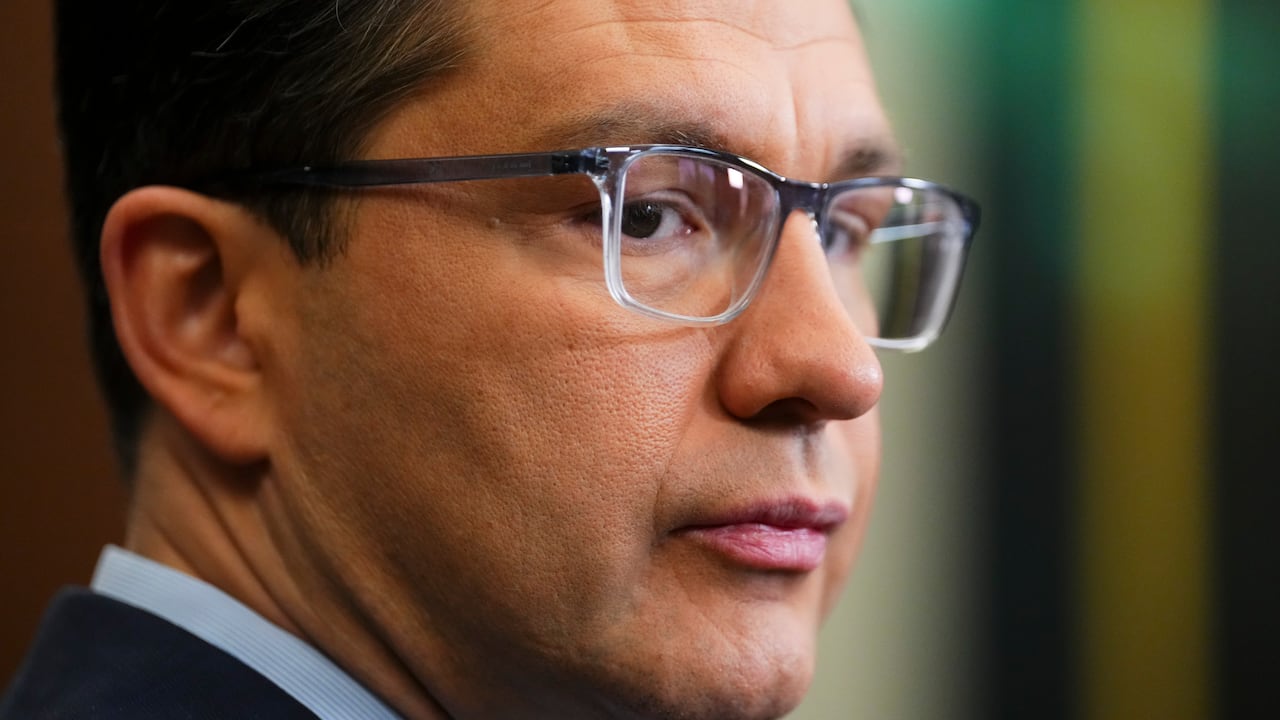
For Pierre Poilievre, August turned out to be anything but a quiet month.
Advertisement
The leader of the Conservative Party of Canada once again found himself at the centre of the national political debate, but this time for several reasons at once.
Relations with the United States, the cost of living and an issue that is becoming increasingly important for the Conservatives themselves have come to the fore: will Poilievre be able to turn dissatisfaction with certain government decisions into a revival of support for his own party?
Recent events suggest that the political battle is gradually becoming fiercer.
A New Attack on Carney
One of the main targets of Poilievre’s criticism has been the trade negotiations between Canada and the US.
In early August, the Conservative leader accused Mark Carney’s government of making excessive concessions to Washington.
In a letter to the Prime Minister dated 9 August, Poilievre claimed that over the past year and a half, the Canadian side had repeatedly agreed to American demands without, in his view, receiving sufficient concessions in return.
For Poilievre, this is not merely another excuse to criticise the government.
Trade relations with the US are directly linked to jobs, industry and the country’s economic confidence. That is why the Conservatives are seeking to make this issue one of the key political topics for the second half of the year.
The conversation then turned to fuel prices
Just a few days later, Poilievre shifted the focus to an issue that Canadians feel much more acutely.
On 16 August, he called on the federal government to extend the temporary reduction in petrol excise duty for at least another ten months — until 1 July 2027.
The Conservative leader also sent his proposal directly to Carney.
The logic behind this political strategy is clear.
Instead of abstract talk about macroeconomics, Poilievre is returning to issues that can be linked to the day-to-day expenses of an ordinary family: petrol, housing, taxes and the cost of food.
This approach has been central to his political message for many years.
But Poilievre Himself Faces Another Problem
Whilst the Conservative leader is stepping up the pressure on the government, the latest polls paint a picture that is far less favourable to him.
A Research Co. poll published on 10 August showed Mark Carney leading when Canadians were asked who they would prefer to see as prime minister. According to this poll, the gap between Carney and Poilievre stood at 23 percentage points.
Another recent poll – by Abacus Data on 16 August – also showed the Liberals leading at national level, although the specific figures vary considerably depending on the polling organisation.
The current situation is therefore unusual.
Poilievre remains the government’s main political opponent and continues to actively set the agenda, but at the same time he has to work to improve his own standing among voters.
Even Within the Conservative Campaign, an Awkward Moment Arose
An incident during the campaign for the by-election in North Vancouver—Capilano was particularly telling.
Conservative candidate Stephen Curran admitted during a meeting with voters that he was hearing people criticise Poilievre.
This was prompted by a question from one of those present, who described the Conservative leader as a figure who divides society too much. Curran replied that he does indeed hear such comments when speaking to voters.
One such incident, of course, does not settle anything.
But, taken together with the poll results, it highlights a problem that the Conservative leadership will find difficult to ignore.
And Yet There Is No Basis for Talk of the End of His Career
Despite his poor poll ratings, Poilievre’s position is fundamentally different from that of a politician preparing to leave the political stage.
He remains leader of the Conservative Party of Canada and leader of the official opposition. This is confirmed by the latest figures from the House of Commons.
Moreover, after losing his previous seat in the 2025 federal election, Poilievre returned to the House of Commons via a by-election in Battle River–Crowfoot.
He now faces a different challenge.
He must convince Canadians not only of the weaknesses in the Carney government’s policies, but also that it is the Conservatives who offer a more compelling alternative.
The Coming Months Could Be Decisive
It is here that recent events are shaping a much larger political narrative.
Poilievre is stepping up the pressure on Carney over trade with the US. He is calling for fuel tax relief to continue. He is once again making the cost of living a central part of his political message.
But at the same time, recent polls suggest that dissatisfaction with the government alone may not be enough.
For the Conservative leader, a period is beginning in which virtually every major speech will be judged not only on how hard it hits the Liberals.
The key question now is a different one: does it help Pierre Poilievre himself win back voters?
And it is precisely the answer to this question that may determine the next stage of his political career.